
Places Worth Experiencing
Salento beyond the beaches:
a journey through Southern Puglia

“Lu sule, lu mare, lu ientu.”
The sun, the sea and the wind.
If you spend enough time in Salento, you’ll hear this expression more than once.
It isn’t just a local saying. It’s probably the simplest way to describe this corner of southern Italy.
The sun shapes daily life for most of the year. The sea is never far away. And the wind does more than move the waves, it often decides where locals will spend the day.
It’s not unusual to hear someone say, “Today we’ll go to the Ionian coast,” simply because the wind is coming from the east.
It’s a small detail, but one that tells you a lot about life here.


A LAND BETWEEN TWO SEAS
Salento forms the southern tip of Puglia, the part of Italy often described as the heel of the country’s boot.
What makes it unique is not simply its coastline, but the fact that it offers two completely different seas within less than an hour’s drive.
On the Adriatic side you’ll find limestone cliffs, sea caves and deep blue water that changes colour throughout the day.
On the Ionian coast the scenery softens. Long sandy beaches, shallow water and calm conditions often remind visitors of the Tropics.
That proximity makes a real difference when designing an itinerary.
A morning swim below the Adriatic cliffs, lunch at a countryside masseria, then sunset on the Ionian coast, it’s all possible without spending the day in the car.
Yet Salento is far more than its beaches.
Drive just a few miles inland and the scenery changes completely.
Ancient olive trees, dry stone walls, vineyards, prickly pears and quiet country roads create a landscape that has changed very little over the centuries.

A LAND SHAPED BY HISTORY
Because of its strategic position in the Mediterranean, Salento has been shaped by Greeks, Romans, Byzantines and, later, the Spanish.
Their legacy can still be seen in the architecture, local traditions and even in the language spoken in some villages today.
During the sixteenth century, the Spanish built the coastal watchtowers that still line the shoreline not as fortresses, but as a communication network.
Warnings could travel from tower to tower within minutes, giving inland communities time to prepare for approaching fleets.
Further inland, fortified masserie tell another part of the story. For centuries they were working farms, family homes and places of refuge all at once.
Today many have been carefully restored and welcome travellers from around the world.
Some offer olive oil tastings, others host Apulian cooking classes or dinners served outdoors beneath centuries old olive trees.
They’re often among the experiences guests remember long after returning home.
Scattered throughout the countryside you’ll also notice small dry stone shelters known as truddhi. Built by local farmers without mortar, they were never intended to impress anyone. They simply provided shade, shelter and a place to store tools during long days in the fields.
For travellers who enjoy exploring by bicycle, this is perhaps one of Salento’s greatest surprises.
Quiet secondary roads, historic villages and endless olive groves make even the shortest ride feel rewarding.
Perhaps that’s what makes Salento so memorable.
Its beauty was never designed. It simply grew over time, shaped by the people who have lived here for generations.

SELECTED EXPERIENCES
Lecce Beyond the Landmarks
There are plenty of reasons to visit Lecce.
Santa Croce Basilica, Piazza del Duomo and the Roman Amphitheatre are certainly among them.
But what we enjoy showing our guests often happens between those landmarks.
A quiet courtyard hidden behind an open doorway, small workshop where papier-mâché is still shaped entirely by hand, a conversation with a local artisan who has spent decades working the same material.
For guests who would like to explore further, we can arrange a private visit to a traditional papier-mâché workshop or meet one of the craftsmen who still carve Lecce’s distinctive limestone using techniques passed down through generations.
The experience continues with a tasting at a selection of local cafés and family run eateries.
Rather than a formal lunch, it’s an opportunity to discover regional flavours while hearing the stories behind them.
As evening approaches, the atmosphere changes once again.

Salento from the Sea
Some places reveal themselves best from the water.
The coastline around Otranto is one of them.
From the boat, the cliffs appear taller, sea caves suddenly come into view and the old watchtowers begin to make sense as part of the landscape rather than isolated monuments.
No two outings are exactly the same.
There is no fixed route.
Each departure is planned according to the wind and sea conditions, allowing the skipper to choose the most enjoyable stretch of coastline for that particular day.
It’s a simple approach, but one that makes every excursion feel personal rather than scheduled.
Along the way there is time to stop in secluded coves that can only be reached by sea.
Guests can swim, snorkel in exceptionally clear water or simply relax on board while the coastline slowly unfolds around them.
An aperitivo featuring local products is served during the cruise, while full-day experiences may include lunch on board accompanied by a selection of Apulian wines.
Sometimes the most memorable part of the day isn’t a particular destination.
It’s having the coastline almost entirely to yourself.
WHERE TO STAY
Patria Palace – Lecce


Some hotels simply provide a place to sleep.
Others become part of the destination itself. Patria Palace belongs to the second category.
Housed in a historic palace overlooking the Basilica of Santa Croce, it places guests in the very heart of Lecce’s old town. Step outside and the city is already there.
Its location makes it easy to explore on foot, whether that’s an early morning stroll before the streets become busy, an afternoon spent wandering between artisan workshops or dinner in one of the city’s hidden courtyards.
For guests who enjoy history, architecture and the atmosphere of Italian cities after sunset, it’s difficult to imagine a better base.
Naturalis Bio Resort – Salento Countryside


Less than thirty minutes from the coast, Salento feels completely different.
The sea gives way to olive groves, vineyards and quiet country roads.
Naturalis Bio Resort sits right in the middle of this landscape. We often recommend combining a stay here with time on the coast.
It offers a different perspective of the region, one that many visitors don’t expect.
From the resort it’s easy to reach small olive oil producers, local wineries and historic masserie, making it an ideal base for guests interested in food, wine and rural traditions rather than beaches alone.
It’s the kind of place where the pace of the day is set naturally: Breakfast outdoors, a drive through the countryside, dinner beneath the olive trees.
Simple moments that often become lasting memories.
THE TASTE OF SALENTO
Pasticciotto Leccese
Every destination has a flavour that immediately brings it to mind. In Salento, that flavour is Pasticciotto.
At first glance it looks like a simple pastry, golden shortcrust pastry filled with warm custard.
Nothing more. Until you taste one fresh from the oven.
The crisp pastry gives way to a smooth, rich cream filling that has been prepared the same way for generations.
It’s not something locals buy days in advance, it’s something they enjoy while it’s still warm.
If there’s one small ritual we’d recommend, it’s this: Find a neighbourhood pastry shop early in the morning, order a freshly baked Pasticciotto and enjoy it with an espresso at the counter.
It’s a simple habit.
And one of the easiest ways to experience everyday life in Salento.

DESERVING INSIGHT
Why We Recommend Salento in September and October
People often assume August is the best time to visit Salento.
We don’t.
If we had to choose just one period of the year, it would almost certainly be late September or October.
The beaches become quieter, restaurants are once again filled with locals, historic towns settle back into their everyday rhythm, making it easier to experience the region beyond the summer crowds.
The sea is often still warm enough for swimming, daylight remains generous and moving from one place to another becomes noticeably easier.
Choosing the right destination matters, choosing the right moment to visit matters just as much.
That’s why, when we design an itinerary, we never begin with a list of places to see.
We begin with a much simpler question: When is this destination at its very best?
The answer changes from one region to another. Understanding that difference is one of the reasons our travel advisors choose to work with us.
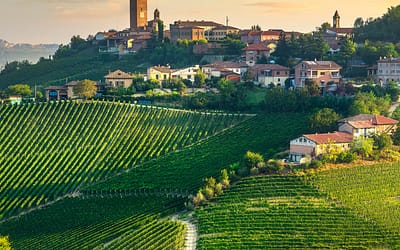
The Langhe: Where the Landscape Tells the Story
"Nebbia."Mist. In the Langhe, it doesn't hide the landscape.It slowly reveals it. Some places become famous because of what they produce. The Langhe are different. Long before Barolo and the White Truffle became symbols of this region, these hills had already shaped a...